
Redding, California / and anywhere in the country
One house.
One offer.
One date you pick.
Sean buys houses with cash — as-is, no agents, no repairs, no showings. Tell him the address and he'll tell you what he can pay.
No cost, no obligation, no listing. It's Sean who calls — not a call center.
- 40+
- Homes bought locally
- 14
- Average days to close
- 850
- Offers made this year
- $0
- Fees, repairs, closing costs
Free tool / no email required
The walk-away number.
Not what the house is worth — what you actually keep after the mortgage, the fees, the repairs and the back payments come out. Most owners have never seen this number, and it's the only one that decides anything. Move the sliders. Nothing is sent anywhere.
optional
Condition today
Needs light work
most people: none
How long until you need to be out
60 days
Your deadline is the problem, not the price
You said 60 days. Listing takes 75 to 90 before you reach a closing table — and that's the smooth version, with the repairs already paid for and no buyer walking at the inspection. At this deadline the money comparison isn't the real question. Whether it closes in time is.
Address to funded
You send the address.
Two minutes on the form, or one phone call. Nothing to clean, nothing to prepare, nobody walking through your house.
A written offer, in your hands.
Sean walks the property, runs the numbers the way he'd run them on a house he was keeping, and sends a real cash figure. No obligation.
Title funds. You're out.
The escrow company handles the paperwork and the money hits your account. Leave whatever you don't want — the garage, the shed, all of it.
The one that never drops.
Seventy-five days in, a listing is somewhere between an offer and an inspection — and you'd have paid for the repairs back on day one.
Funded
Day 01
Tell him about the house
Send the address. No cleaning, no photos, no showings scheduled around a stranger.
Day 02
A written offer inside 24 hours
A clear cash figure in writing. No obligation, and no bait number he walks back later.
Day 10
Close on your date
A local title company handles the paperwork and you get paid. Earlier or later — your call.
Your options, honestly
Three ways out of a house.
Every owner is choosing between the same three, whether they've priced them out or not. Here is what each one really costs.
Renting turns a house into a job.
Most owners land on "I'll just rent it out" by default. Selling feels final, so keeping the house and collecting a check sounds like the safe middle ground. Before you commit, look at what that decision actually signs you up for.
You own the roof, the water heater and the 11 p.m. phone call. You cover the mortgage, taxes and insurance every month it sits empty — and the national rental vacancy rate is running about 7%. Budget near 1% of the home's value a year for maintenance, more if it's older. Property management takes 8–12% of the rent if you'd rather not handle it. And if a tenant stops paying, you are not getting them out this month: evictions average 7 to 16 weeks and run around $3,500 by the time it's over.
At the end of all that, you still own a house that needs the same work it needs today — plus a few more years of wear and somebody else's idea of taking care of it.
Renting is the right call for some owners. If you have cash reserves, time on your hands and you actually want to be in the rental business, go be a landlord — it can work. But if you're leaning that way mainly because selling sounds like a hassle, that's the part Sean takes off your plate.
If a notice has shown up
Here's what actually happens next. All of it, including the parts that don't involve Sean.
A Notice of Default is not an eviction and it is not the end of anything. It starts a clock, and that clock is longer than most people are told by whoever is calling them. You have more than one option. Sean is one of them, and for plenty of people he is not the best one.
Step one
Notice of Default
Recorded with the county. The clock starts here.
Step two
At least 3 months
A minimum reinstatement window set by statute.
Step three
Notice of Sale
Posted and mailed at least 20 days before any sale.
Step four
Sale date
Typically four months out at the earliest — often much longer.
General outline of California's non-judicial process, simplified. Timelines differ by loan, by state and by servicer, and yours is set by your own paperwork — not by this page. Read what you were sent, and have a lawyer read it too.
Your options, honestly ranked by what they cost you.
01
Reinstate the loan
Pay what's past due plus fees and the default goes away. In California you can generally do this up to five business days before the sale. If you can reach the money, this is almost always the best outcome.
Costs you nothing but the money
02
Call your servicer
Modification, forbearance, a repayment plan, partial claim. You apply directly, yourself, for free. It is slow and frustrating and it still beats every paid alternative.
Free — do it yourself
03
A HUD-approved housing counselor
Government-approved, genuinely free, and they don't want to buy your house. They will walk your actual numbers with you. Find one at hud.gov. If you do nothing else on this page, do this.
Free — start here
04
List it with an agent
If you have real equity and enough runway before the sale date, the open market pays the most. Be realistic about the calendar — see the listing section above.
Highest price, slowest
05
Sell it for cash
This is Sean. It makes sense when the clock is short, the house needs work, or you have no money to put into it. You net less than the open market. That trade is only worth it if speed and certainty are what you actually need.
This is what Sean does
06
Short sale
For when you owe more than the house is worth. It requires your lender's approval and has to be handled by a licensed real estate broker or an attorney — not by a cash buyer. Sean can point you toward one; he does not run these himself.
Licensed broker only
07
Talk to an attorney
Worth it when there's a bankruptcy, a divorce or an estate tangled up in the house — a lawyer is the only one who can sort those out. Just know it's the slowest door on this page: consultations get scheduled out, letters take weeks, and the sale date does not wait for any of it. If the clock is already short, get your options priced first so you're not paying for advice on a house that has already sold.
Slowest — mind the clock
08
Do nothing
Included because it's what most people actually choose. The sale happens, whatever equity was in the house goes with it, and the credit damage is worse than any option above. Silence is the only choice with no upside.
The costly one
Your right to change your mind
When you sell a home that's in foreclosure in California, state law gives you five business days to cancel the contract in writing — and requires the buyer to hand you that cancellation notice, in writing, with the contract. Sean follows that to the letter, every time. It isn't a courtesy and it isn't negotiable. Any buyer who treats it like an inconvenience has just told you exactly who they are.
The work
What Sean takes on.
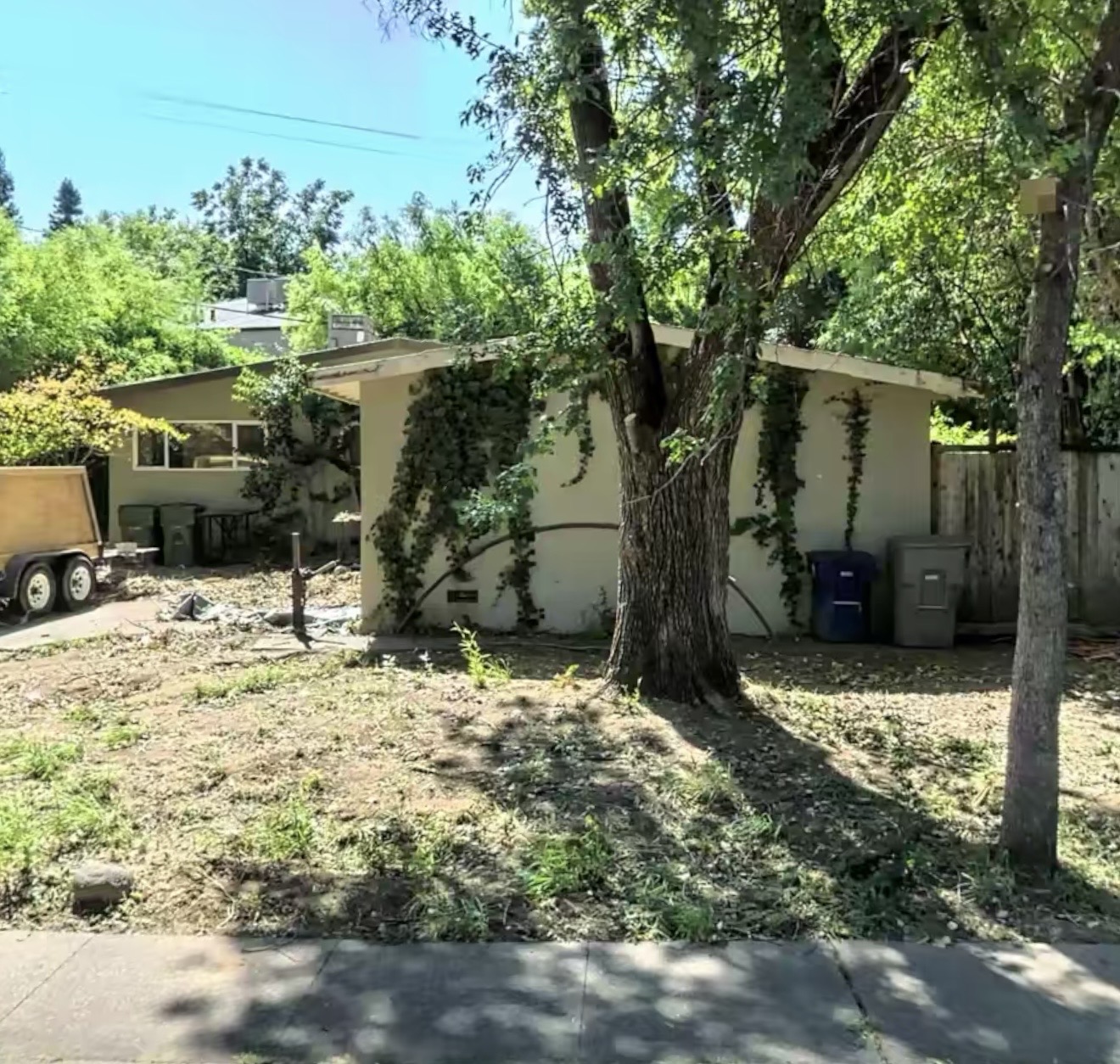
This is the kind of house he buys — ivy pulling into the siding, a dumpster in the side yard, a lawn that gave up years ago. Nobody was listing this one on a Tuesday and selling it by Friday.

As he found it
Day one
A hole open in the roof, water damage through the house, ivy into the siding, yard down to dirt.

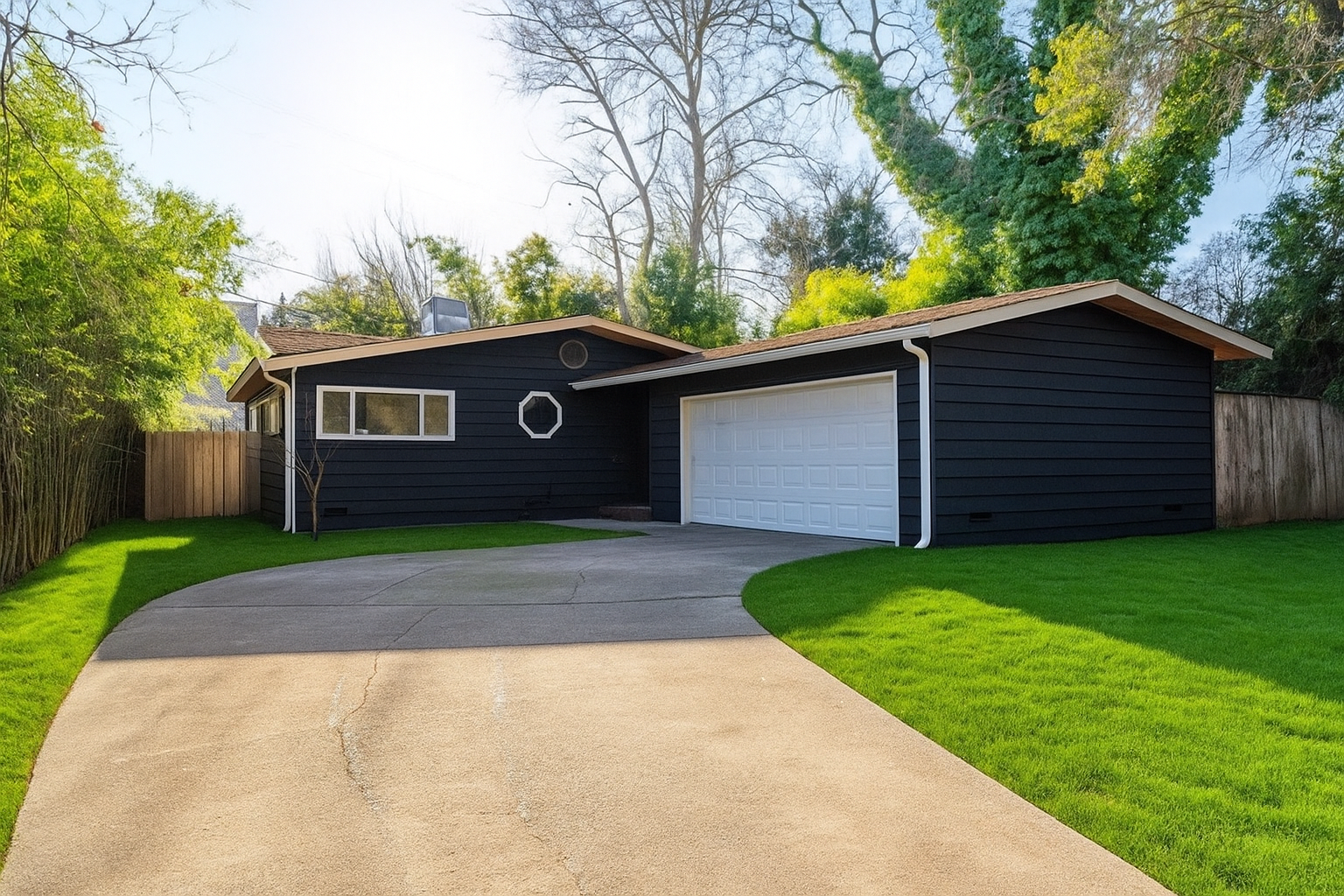
Design rendering
Where it's headed
The exterior scope, rendered — not a photograph. Finished shots replace this when the work is done.
Sean — read this
The right panel says "rendering" because that's what it is. Send me one real photo from that driveway angle with the work finished and I'll swap it in, drop the label, and turn this back into the drag-to-compare slider — which is the version that actually sells.
Who you're dealing with
Sean swung a hammer before he ever wrote an offer.

 Swinging the hammer
He came into this out of construction. That's not a marketing detail — it's why he can stand in a kitchen with a sagging ceiling and give you a number the same day instead of sending three contractors out to bid it first.
Silver Key Home Offer is one person and his own money. There is no call center, no rotating rep, no lead getting sold to four investors the minute you hit submit. You talk to Sean, you get a number from Sean, and if the answer is that you shouldn't sell to him, he's the one who tells you that too.
He buys the house, fixes what's wrong with it, and sells it to somebody who wants to live in it. That's the entire business. He isn't an agent and isn't trying to become one.

 Family
Sean, his wife and their son, outside Redding. He lives in the same county he buys in — the houses he fixes end up back on his own street.
Straight answers
The questions you're actually asking.
It's below what a fixed-up house sells for on the open market, and Sean will say so out loud. He takes on the repairs, the holding costs, the commission and the risk that it doesn't go to plan — that spread is where his money comes from. What you get in exchange is certainty, speed, and zero dollars out of your pocket. The tool above shows you the real gap so you can decide whether that trade is worth it. Sometimes it isn't, and he'll tell you.
No cost, no obligation